Table Of Content

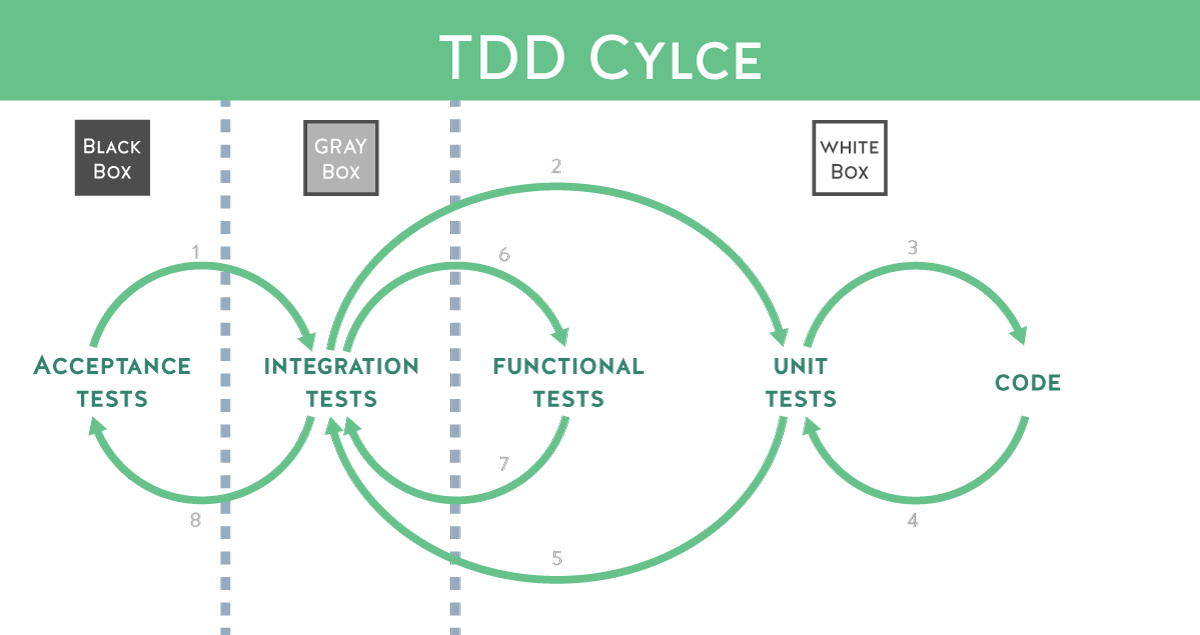
And if we save it and check our tests, we should see it pass as well. We impose a little bit of discipline here and shift our focus to making this test pass. We'll build a palindrome checker using the Classic TDD approach. By using a mixture of both inside-out and outside-in, we can compose an elegant approach to TDD our way through an entire project. This technique is called Double Loop TDD and it's how we sculpt our solution to fit our tests.
Running Behave for Behavior Driven Development
In practice, more test design techniques should be applied together for complex specifications. Risk analysis is inevitable to decide the thoroughness of testing. The more risk the usage of the function/object has, the more thorough the testing that is needed. Risk and complexity analysis determines the test design techniques to be applied for a given specification. We add that test to our unit under development that currently contains no other code.
Exploring the Advantages and Comparing TDD with BDD: Practical Examples Highlighting Different Approaches
You will explore ways to run TDD tests such as, Python’s built-in test runner, Unittest, and the more feature-rich module, Nose. You will learn about assertions and how to use them to test code. You will discover why you must include happy and sad paths in your test module. You will also discover the test fixtures and how to use them to establish an appropriate initial state for each test. In traditional software development (such as the Waterfall Model), the order of work is design, code and test. Test-Driven Development (TDD) reverses this order to test, code and design/refactor.
Double Loop TDD
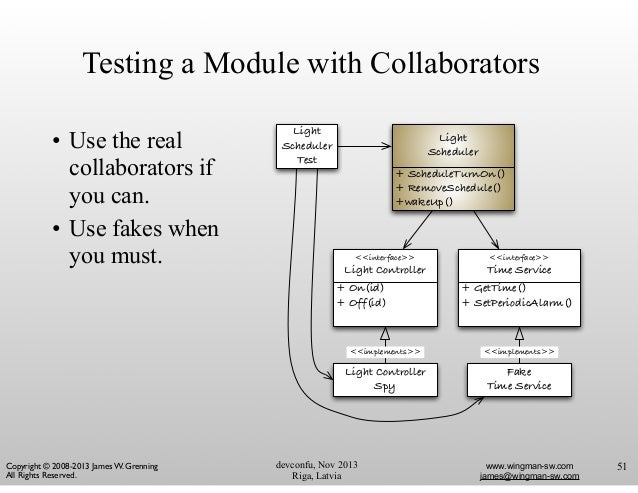
Fix this by adding a private default constructor, and mark the class as final. Let’s extract the duplicate code to a method or class to be used here, so that any future change is in one place. A design tip is to always use the general interface as target type, as this is cleaner code that is more easily maintained.
Acceptance Testing
Starting with the acceptance test, we convert the user story into a behavioral test written using the exact same language from the domain. This means our tests should read like plain English, and represents the exact user story that we're about to build. The goal of this blog is to discover the best techniques for writing testable, flexible, maintainable code, and to teach others how to do it too. Today, the software quality attribute we're most interested in is testability. Mäkinen and Münch analyze current literature and learn that TDD reduces defects, makes code more maintainable and improves external quality. However, it doesn't seem to improve productivity or internal code quality.
I hope this article has provided a comprehensive exploration of Test-Driven Development (TDD) in the context of Java projects. We began by explaining the core principles of TDD, including the red-green-refactor cycle which emphasizes writing tests before code implementation. We further compared TDD with Behavior-Driven Development (BDD), highlighting their distinct focuses and terminologies. TDD means emphasizing automated tests before writing the actual code. It helps developers to write better quality code, unearth issues or bugs early in the development process, and ensure overall project success.
Test-Driven Development
This way, we will always introduce the least code in a faster way, without thinking of everything up front - the MVP concept. We run the tests again to make sure that our refactoring didn’t change any code functionality. This is a critical step; one of the most important steps is to be able to identify all the requirements of the given problem at hand to streamline the implementation phase to come. By having these smaller steps, we will have a clean, easily implemented, testable code. The "TDD in practice" section and the concepts introduced generally apply to any language, but I use Java for the demonstration.
TDD and BDD
Top Practices for Software Development in 2023 - hackernoon.com
Top Practices for Software Development in 2023.
Posted: Wed, 28 Sep 2022 07:00:00 GMT [source]
Any changes that break existing functionality are caught immediately. Feedback comes later in the development process, potentially after more code has been written. It turns writing code into this kind of goal-based activity with short feedback loops while also guiding the coder to write code that is concise and straight to the point. But the good thing is you don’t have to immediately flesh out a fully functioning and optimized application.
Observability-Driven Development for Tackling the Great Unknown - InfoQ.com
Observability-Driven Development for Tackling the Great Unknown.
Posted: Thu, 31 Jan 2019 08:00:00 GMT [source]
Entire test suites or test cases exposing real bugs can be automatically generated by software using model checking or symbolic execution. If you skip out on testing your design, you’re like a developer who never runs his test suite. The tests are articulated first and are very specific. For example, if a calculation of some type is desired, there must be a test that describes the calculation as an example.
Without tests (or with bad tests), it's hard to continue to safely make progress because new changes introduce regressions. Refactoring without tests is a great way to introduce regressions. To find the confidence to safely add, remove, or refactor code without the fear of introducing bugs and regressions, we need tests.
Test Driven Development (TDD) is the software development process where developers write automated test scripts before writing functional code, ensuring code validity and minimizing test script duplication. This approach involves implementing code, writing tests, and running tests to verify the code's functionality. By refactoring and addressing failing tests, developers can continuously improve their codebase. With ATDD, the development team now has a specific target to satisfy – the acceptance tests – which keeps them continuously focused on what the customer really wants from each user story.
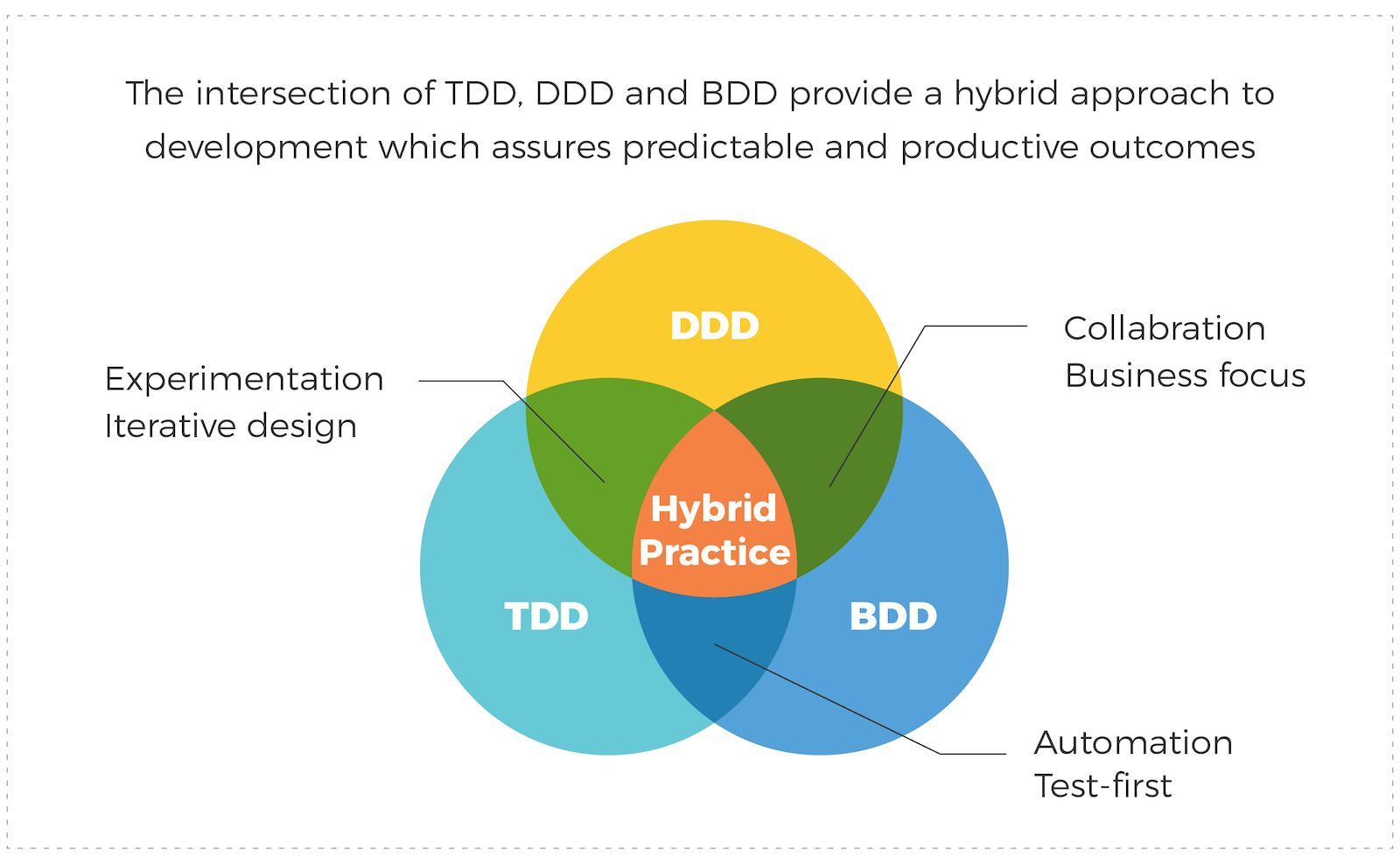
This effect often comes about because the methodology requires that the developers think of the software in terms of small units that can be written and tested independently and integrated together later. This leads to smaller, more focused classes, looser coupling, and cleaner interfaces. It’s worth noting that TDD and BDD are not mutually exclusive and can complement each other in the software development process. TDD focuses on verifying the correctness of code at a granular level, while BDD focuses on verifying the behavior of the system as a whole from a user’s perspective. The choice between TDD and BDD depends on the specific needs, scope and collaboration dynamics of the project.
TDD encourages a focus on small, testable code units and promotes collaboration and communication among team members. Test-driven development involves writing a single developer test, typically a unit test, and then creating just enough production code to pass that test. These unit tests focus on each small aspect of the system's functionality. Test Driven Development is a natural fit for Agile development because it emphasizes writing tests before writing the actual code. This ensures that the code is thoroughly tested and potential bugs are caught early in the development process. Test-driven development promotes a “test-then-code” approach.
This means the released code is not exactly the same as what was unit tested. In object oriented design this still does not provide access to private data and methods. Therefore, extra work may be necessary for unit tests. In the .NET Framework and some other programming languages, partial classes may be used to expose private methods and data for the tests to access.



No comments:
Post a Comment