Table Of Content
Successful developers need to not only build the right software but build it right. To know your software works correctly, you need to test each unit of code. One of the best methods for this unit-level testing is test driven development.
Testing isn't regularly taught in schools
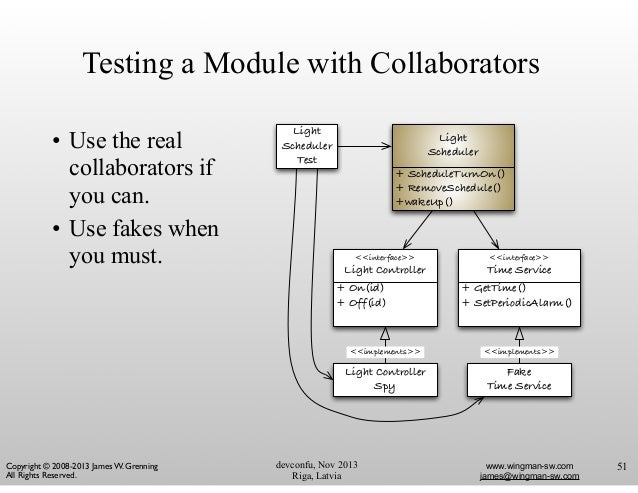
This makes sense, so long as the customer you are building it for actually buys in, does the testing, and actually cares enough to provide feedback. I’ve been on some projects where the feedback from the customer was so lacking, you almost had to divine expectations yourself, and hope it was the best way to go. That IMO is not necessarily good, but some people may just no have, or take the time to do user side acceptance testing, that’s why there should be testers in house who are advocates of the customer too. The adoption of TDD can lead to more reliable software, faster bug detection and enhanced collaboration among development teams. In a blog post, Grenning presents a useful visualization of how TDD saves time and cost.
User Testing Is Test-Driven Design
So we need to change this method by adding “static” word before Boolean as public static boolean isValid (String password). Refactoring Class PasswordValidator () to remove above error to pass the test. First in this TDD example, we write the code that fulfills all the above requirements. I hope you enjoyed this as much as I did, and that it encourages you to start using TDD in your next project or even the task at hand.
Test Driven Development for Embedded C--New from Pragmatic Bookshelf - O'Reilly Media
Test Driven Development for Embedded C--New from Pragmatic Bookshelf.
Posted: Wed, 27 Apr 2011 07:00:00 GMT [source]
A Guide to Test-Driven Development (TDD) with Real-World Examples
The goal is to show how we should think when we design and to create exciting art, not just write code. Here, we can ensure that the path through the software is working, but when it fails, we do not know which class is failing. A system test checks the complete system, including hardware operating system, web service, and so on.
Test-Driven Development
Modern unit testing in C with TDD and Ceedling - Embedded
Modern unit testing in C with TDD and Ceedling.
Posted: Fri, 07 Oct 2016 07:00:00 GMT [source]
Therefore, the test coverage is undoubtedly higher under test-driven development than the traditional development models. When writing a test, it is important to keep it as simple as possible. Tests should be written to verify one specific piece of functionality, and each test should be independent of other tests. This helps to ensure that the tests are easy to understand and modify. Effective layout of a test case ensures all required actions are completed, improves the readability of the test case, and smooths the flow of execution.
The problem is the designer’s “broken test.” By doing user interviews, mental modeling, and other contextual research, the designer gathers the information that allows her to understand the problem. BDD can be a bridge to TDD, but often more detail is needed for writing code. One question that often arises is “Were past code-first methods flawed”? I would say the answer lies not in the methods, but in the human misunderstandings of the problem to be solved. But, many years earlier (1957), in the book, Digital Computer Programming by Daniel D. McCracken, wrote, “The first attack on the checkout problem may be made before coding is begun”.
I don’t wait until I finish all the refactoring I intend to do, then run all the test cases again. We want feedback quickly and running our test cases is our feedback loop. It allows us to detect any errors as early as possible and in small steps, not over long ones.
Alternative approaches to writing automated tests is to write all of the production code before starting on the test code or to write all of the test code before starting on the production code. Without test-driven development, you end up with a bunch of code that may or may not (probably not) work. Without user testing, you end up with a piece of software that has a bunch of features that may or may not (probably not) solve a problem in a usable way.
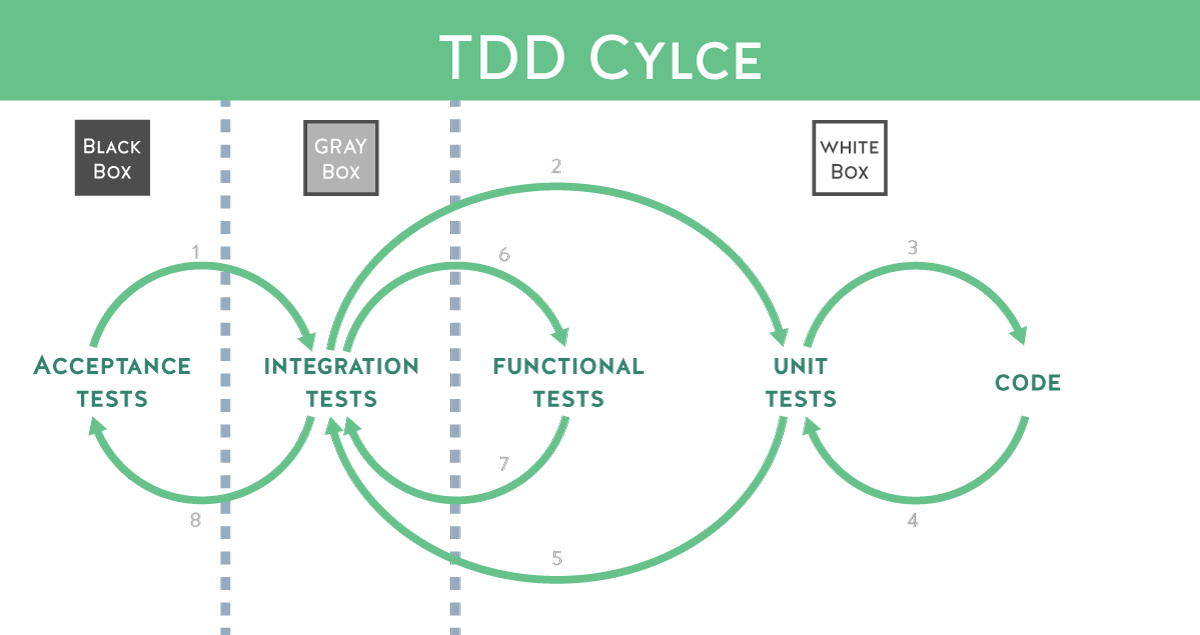
Then, we run the unit and it fails (Red) because we have not yet implemented the function to “add”. Even at the practical level, TDD can be applied manually. However, for many, TDD is automated using tools such as Junit or other xUnit tools, depending on the coding language being used. Attributes such as security, usability, accessibility, performance, reliability, and so forth, are not considered part of TDD. This can be confusing at times because many software characteristics arise from functionality. We should like this process because it keeps tight feedback loops.
Continuous Integration (CI) and Shift Left are practices or techniques that are aligned with TDD. Riley said there are several approaches that can help developers write more robust tests when using TDD. Some write a few broad end-to-end tests first to help guide their code in the right direction, instead of jumping directly into writing unit tests. There’s a high probability that project requirements may change during the development sprint cycle. To deal with this and to build products aligned with the client’s changing requirements, teams need constant feedback to avoid dishing out unusable software.
May require more time upfront due to the creation of tests before coding. However, it can lead to time savings in debugging and maintenance phases. Adapting to changes may be more challenging, especially if the existing codebase is not well-structured or modular. The focus is on verifying that the code behaves as expected. In other words, to do TDD is to have a different mindset.
Writing tests first is helpful when Freed needs to try out ideas for how to structure code that she doesn’t have a clear handle on yet. Wanting to avoid extra work is certainly a valid concern, but TDD supporters tend to disagree that the method causes this problem, arguing that the practice works well with both simple and complex projects. More adaptable to changes in requirements, as the code is designed to meet the specified tests. Changing requirements can be accommodated more easily. Debugging may be more challenging as issues might be discovered later in the development process, and the root cause might not be as obvious. Easier to debug since tests are written for specific functionalities, making it clear which part of the codebase is causing issues.
You may think it’s marketable, and you may think it works, but you just don’t know. TDD is a development method that is based on simple principles, yet has many nuances to consider when actually applying it. It’s important to remember that TDD is an iterative process and these best practices evolve over time.
When refactoring the code, it is important to keep the tests passing at all times. This ensures the code is still working as intended and that any changes to the codebase do not break existing functionality. Once the test is written, the next step is to write the code that passes the test.
Over the past year, I've been paying more attention to how traditional tradespeople work. I've been looking for parallels between how they work and how we work as software developers. Join 15,000+ other value-creating React, TypeScript & Node.js devs mastering The Essentials of software design, architecture & testing. TDD isn’t a magic method, so it’s only as effective as the developer who wields it. For its supporters, one of the most obvious benefits of TDD — having tests — is actually just a beneficial side effect rather than the goal of TDD. Madelyn Freed, a full-stack engineer at Stride, said that coming from a non-traditional programming background, TDD is the development style she’s most familiar with.